首頁
» 皮膚美白
»
How to Check a Brightening Product for Unsafe or Undisclosed Ingredients
How to Check a Brightening Product for Unsafe or Undisclosed Ingredients
If you are checking a skin-brightening product for unsafe or hidden ingredients, the most important point is this: you can screen for warning signs at home, but you cannot prove that an undisclosed ingredient is absent without reliable laboratory testing. A clean-looking label, a barcode, or an online listing is not a guarantee that the formula matches what is printed on the package.
For people in the United States, current FDA guidance is especially clear. As of September 2026, the FDA says there are no FDA-approved or otherwise legally marketed over-the-counter skin-lightening products, and it warns that some products sold for “brightening,” “fading,” “whitening,” or “evening” skin tone have contained mercury and/or hydroquinone. The agency has also found products in which those ingredients were not fully disclosed on the label. See the FDA’s current warning on skin products containing mercury and/or hydroquinone.
This does not mean every cosmetic marketed as “brightening” is unsafe. The word is used broadly. A moisturizer or serum may use the term as a cosmetic claim, while another product may be marketed specifically to lighten dark spots or overall skin tone. What matters is the ingredient list, the claims, the product’s regulatory status, and whether the packaging and seller can be verified.
1. Read the full ingredient list before you use the product
Start with the outer box, bottle, jar, tube, package insert, or firmly attached label. In the U.S., retail cosmetics generally must have an ingredient declaration. FDA labeling rules say ingredients are usually listed by common or usual names, generally in descending order of predominance, with specific exceptions for low-concentration ingredients and color additives. You can review the FDA’s summary of cosmetic labeling requirements.
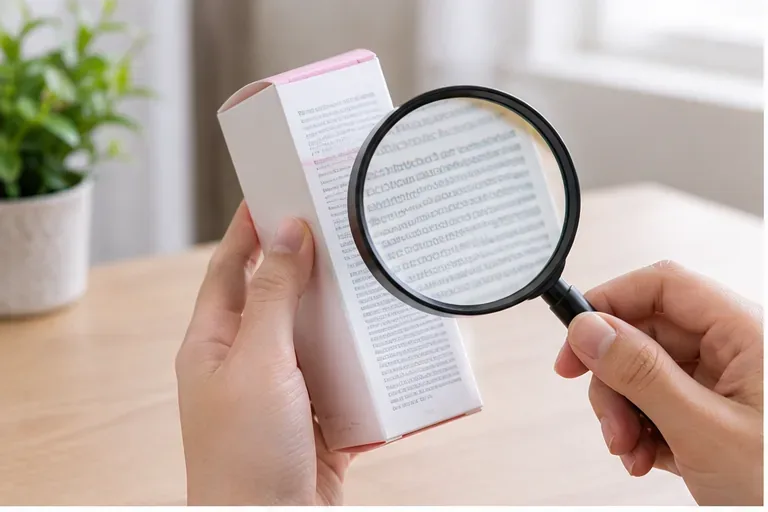
Start with the complete label: inspect the ingredient panel, directions, warnings, and the manufacturer or distributor information before use.
Look specifically for hydroquinone and for mercury-related terms such as mercury, mercurous chloride, calomel, mercuric, mercurio, or Hg. FDA says consumers should not purchase over-the-counter skin-lightening products containing hydroquinone or mercury. Its updated Skin Product Safety guidance lists these mercury names explicitly.