Home
» Allergy
»
Autumn Allergies or a Cold? Symptom Patterns Worth Tracking
Autumn Allergies or a Cold? Symptom Patterns Worth Tracking
When sneezing, a runny nose, or a scratchy throat starts in autumn, the calendar alone cannot tell you whether it is seasonal allergies or a cold. Both can cause congestion and coughing. A more useful clue is the pattern over time: itchy eyes and symptoms that return after a particular exposure often point toward allergies, while a short illness that builds over a few days and includes feeling unwell may fit a respiratory virus. Neither pattern proves the cause.
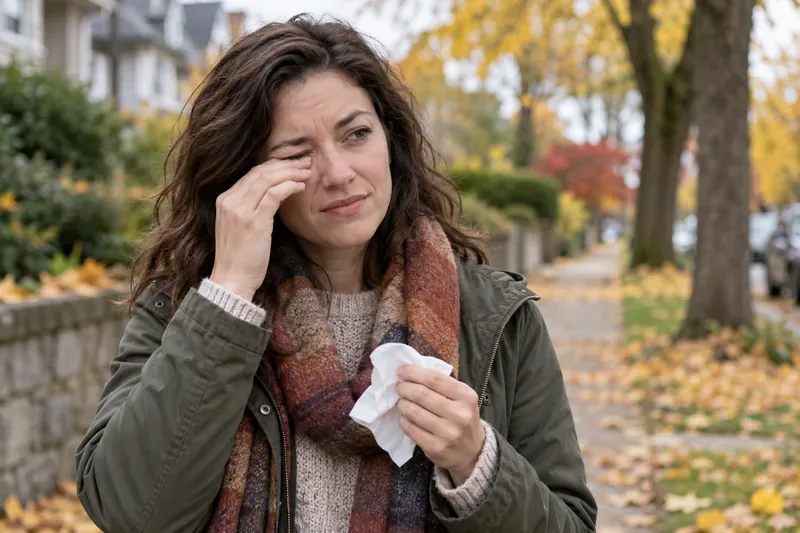
An adult touches an irritated eye while holding a tissue on a tree-lined autumn street, a symptom worth recording alongside nasal symptoms.
Start with the features that separate the patterns
Seasonal allergic rhinitis, often called hay fever, is an immune reaction to airborne allergens such as pollen. It commonly causes sneezing, a runny or stuffy nose, and itching in the eyes, nose, or throat. A cold is a viral infection of the upper respiratory tract. It can also cause a runny nose, congestion, sneezing, and cough, and may add sore throat, headache, mild aches, or a low-grade fever. The overlap is why a single symptom rarely settles the question.
What to track
Pattern that can fit allergies
Pattern that can fit a cold or other virus
Itching and eyes
Itchy eyes, nose, or throat; watery or red eyes
Itching is less characteristic; sore or scratchy throat may occur
Onset and course
Returns or persists while exposure continues; may recur in a similar season
Develops as an illness and often peaks over a few days before improving
Whole-body symptoms
Usually centered on the nose and eyes
Feeling run-down, headache, mild body aches, or fever may occur
Context
Worse after time outdoors or another repeatable exposure
Recent close contact with someone sick can be relevant
These are clues, not rules. Some people have allergies without prominent eye symptoms, and some viral infections cause no fever. A person can also have allergies and catch a virus at the same time.
What to prepare before you track symptoms
Use a simple note on paper or in your phone. Record once or twice a day for several days, and whenever symptoms noticeably change. You do not need a special app, a pollen monitor, or a perfect medical vocabulary. “Eyes itchy after yard work” is more useful than trying to label the illness on day one.
Time: date, approximate start, whether symptoms came on suddenly or gradually, and whether they are improving, steady, or worsening.
Symptoms: sneezing, nasal congestion, runny nose, eye or nose itching, watery eyes, cough, sore throat, headache, aches, chills, tiredness, and temperature if you have a thermometer.
Exposure: time outdoors, mowing or raking, a dusty room, pets, smoke, or close contact with someone who is sick. Note the time and whether symptoms eased away from the setting.
Impact and care: sleep, work or school, breathing or wheezing, medicines taken, and whether there was a clear change afterward. Follow package directions and ask a clinician or pharmacist if you are unsure about a medicine.
Keep observations separate from conclusions. For example, write “sneezing began during a walk; eyes watered; no temperature checked,” rather than “ragweed allergy.” This protects the record from memory bias and gives a clinician something specific to review.
How to read the timeline
Repeated exposure-linked symptoms
If nasal and eye symptoms recur in the same season, or reliably worsen after time outdoors and settle when you are away from that setting, an allergy becomes more plausible. Autumn pollen can be one trigger, but indoor allergens and irritants can also cause symptoms. A calendar match alone is weak evidence: seasonal timing varies by location and year, and viruses circulate in fall too. Track the actual exposure and symptom change instead of assuming which plant or allergen is responsible.
A short illness that changes over days
A common cold often reaches its worst point within about two to three days of infection and usually lasts less than a week, according to the CDC’s common cold guidance, updated February 19, 2026. People often cannot identify the exact day they were infected, so count from the first symptom only as a practical estimate. A recent sick contact, sore throat, cough, aches, or fever adds context, but none confirms a cold. COVID-19, flu, and other respiratory viruses can look similar; use current testing guidance when exposure, risk, or local recommendations make testing appropriate.
Symptoms that keep returning or do not fit either pattern
Persistent or recurring congestion can have causes beyond pollen allergy and an uncomplicated cold, including nonallergic irritation or sinus problems. An ongoing cough, wheezing, or symptoms that interfere with sleep deserve attention, particularly if you have asthma. Bring your log to a healthcare professional if the pattern is unclear, keeps recurring, or is not improving as expected. Allergy testing may sometimes help identify a trigger, but symptom notes alone cannot identify a specific allergen.
Use a quick daily check
Write down the time symptoms began and whether today is better, the same, or worse than yesterday.
Mark itching and watery eyes separately from congestion, cough, sore throat, aches, and measured fever.
Note likely exposures and contact with anyone ill; avoid guessing the pollen species or virus.
Record any medicine or home measure and the time used. Do not treat improvement after one dose as proof of allergy or infection.
Review the pattern after several days, and share the notes with a clinician if you need advice.
A practical summary might read: “Three days of sneezing and itchy, watery eyes; worse after yard work; no fever measured; sleep okay.” Another might read: “Started yesterday with sore throat and congestion; felt tired today; coworker was sick.” Each gives a clinician more useful context than “allergies or cold?” on its own.
Common tracking mistakes to avoid
Using mucus color as a diagnosis: appearance alone cannot reliably tell you whether symptoms are allergic or viral. Record whether discharge changed, but do not use color as a verdict.
Assuming a fever must be present for a virus: colds and other respiratory infections do not always cause fever. Its absence does not rule them out.
Treating autumn as proof of allergy: colds can happen at any time of year, and other viruses also circulate in fall.
Changing several things at once: starting multiple medicines or avoiding several exposures at once makes it harder to tell what changed. Ask a healthcare professional about safe options, especially for children, pregnancy, chronic conditions, or other medications.
Waiting for the log when urgent symptoms appear: tracking is not a substitute for care.
When to seek medical advice
Seek emergency care for trouble breathing, chest pain, or another severe or rapidly worsening symptom. Contact a healthcare professional if symptoms are severe or concerning, if you have a condition that raises your risk from respiratory viruses, or if you are unsure whether testing or treatment should happen promptly. CDC notes that flu and COVID-19 treatments work best when started soon after symptoms begin for people who are eligible; do not wait for a symptom diary to become complete before seeking advice.
For mild symptoms, keep the record brief and factual. Repeated itching and exposure-linked flares are useful allergy clues; a changing cluster of cold-like symptoms and feeling ill can suggest a virus. The most reliable next step comes from combining that pattern with your health history and, when needed, professional evaluation or testing.