Missed a Birth Control Pill? What to Do Depends on the Type
Missed contraceptive pill instructions vary by type. Learn what CDC guidance says for combined pills, norethindrone, norgestrel, and drospirenone.
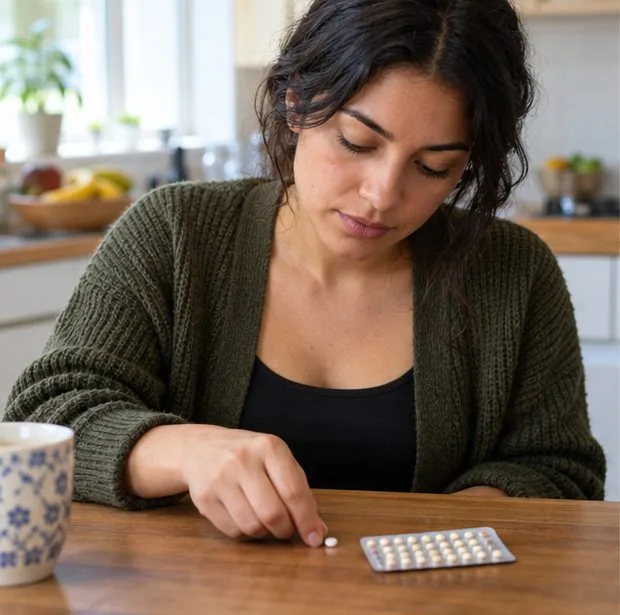
If you missed a contraceptive pill, first identify the exact pill and how many active tablets were late or missed. There is no single rule for every birth control pill: some progestin-only pills have a three-hour window, others allow a much longer delay, and combined pills use a different cutoff. Take the next step from the branch that matches your product, and use its patient leaflet when it differs from general guidance.
This guide summarizes the U.S. Centers for Disease Control and Prevention’s 2024 Selected Practice Recommendations for combined oral contraceptive pills and three U.S. progestin-only pill ingredients: norethindrone, norgestrel, and drospirenone. Guidance and product labels may differ in other countries or for other formulations. This is general information, not a diagnosis or a substitute for your own pill’s instructions.
These details matter because missed-pill recommendations are based on the formulation and the length of time without active hormones. CDC guidance also notes that extending the hormone-free interval can be a particular concern for combined pills. See the CDC’s 2024 U.S. Selected Practice Recommendations. Practical step: keep the pack or a photo of its label with you when calling a pharmacist or clinician.
Take a moment to check the pharmacy label or call the dispensing pharmacy; the generic ingredient name is more useful than the pill’s color or shape. Do not assume the rules for one mini-pill apply to another. If you cannot confirm the product promptly, keep taking the next scheduled pill according to the package directions while you seek advice, and use condoms or avoid sex until you know whether backup is needed. If unprotected sex was within the last five days, ask a pharmacist or clinician today whether emergency contraception is indicated rather than waiting to see what happens.
For a combined oral contraceptive pill, CDC defines a dose as late when less than 24 hours have passed since it was due, and missed when 24 to less than 48 hours have passed. If just one active pill is late or missed within that 48-hour period:

These directions apply to active hormone pills, not placebo pills. They are the CDC’s general guidance for combined oral contraceptives; if your product leaflet gives a different instruction for your specific pack, confirm the difference with a pharmacist or prescriber. Read CDC guidance for late or missed combined oral contraceptive pills.
CDC treats two or more consecutive missed active pills as 48 hours or more since a pill should have been taken. Take the most recently missed pill as soon as possible and discard earlier missed pills. Then continue the pack at the usual time; you may take two pills on one day. Use condoms or avoid sex until you have taken active pills for seven consecutive days.
If the missed pills were in the last week of active pills, skip the hormone-free or placebo interval: finish the active pills you have and start a new pack the next day. If you cannot start a new pack immediately, use condoms or avoid sex until you have taken active pills from the new pack for seven consecutive days. If two or more pills were missed in the first week and you had unprotected sex in the previous five days, CDC says emergency contraception should be considered, with the exception of ulipristal acetate (UPA, sold as ella). A pharmacist or clinician can help select an option and advise how to restart your regular pills.
For norethindrone or norgestrel progestin-only pills, a dose is considered missed when it is more than three hours late. Take one pill as soon as possible, then continue taking one each day at the usual time—even if that means two pills on the same calendar day. Use condoms or avoid sex until you have taken pills correctly and on time for two consecutive days (48 hours). CDC says emergency contraception should be considered, with the exception of UPA, if you had unprotected sex after a missed dose; a pharmacist or clinician can help choose the appropriate type.
The FDA-approved over-the-counter norgestrel pill Opill has its own consumer leaflet: if more than three hours late or one or more tablets were missed, take a tablet as soon as remembered, resume the usual time, and use a barrier method every time you have sex for the next 48 hours. Check the current Opill consumer label on DailyMed. That label is product-specific; do not use it as the instructions for a different pill.
Drospirenone POPs have a different missed-dose rule. If one active pill is late or missed and fewer than 48 hours have passed since it should have been taken, take it as soon as possible and continue one pill daily; CDC says no additional contraceptive protection is needed. If two or more consecutive active pills have been missed—48 hours or more since a pill should have been taken—take the most recently missed pill, continue the daily pills, and use condoms or avoid sex until you have taken active pills for seven consecutive days.

CDC’s drospirenone instructions apply to missed active pills, not placebo pills. The CDC also defines an individual drospirenone dose as “late” before 24 hours and “missed” once 24 hours have passed, while its action chart distinguishes one missed pill from two or more consecutive missed pills. That is why it is useful to count both doses and elapsed time instead of relying on the word “late” alone. Review the CDC’s pill-specific POP recommendations.
Contact a pharmacist, sexual health clinic, or clinician promptly if you missed pills and had sex without a condom or another method, especially if the missed doses were near the beginning of a pack or occurred after the hormone-free interval. Emergency contraception works within a limited time: CDC advises emergency contraceptive pills as soon as possible within five days after sex; a copper IUD may also be placed within five days of the first act of unprotected sex. CDC’s missed-pill pathways say to consider emergency contraception other than UPA when it is indicated, because UPA can interact with restarting a progestin-containing pill. The most appropriate option depends on the pill you use, timing, health factors, and local availability.

One detail matters if ulipristal acetate (ella) is considered: CDC advises waiting at least five days after taking it before starting or restarting hormonal contraception, because taking progestin too soon may interfere with ulipristal. Condoms or abstaining are needed while waiting and for seven days after hormonal contraception is restarted (or until the next menstrual period, whichever comes first). With levonorgestrel emergency contraception, regular hormonal contraception may be resumed immediately, with condoms or abstinence for seven days. These instructions are different, so do not guess at a restart schedule. See CDC guidance on emergency contraception and restarting regular contraception.
A missed pill does not tell you whether you are pregnant, and a pill count cannot calculate your individual chance of pregnancy. CDC’s cutoffs are action guides; evidence directly linking missed-pill patterns to pregnancy outcomes is limited for some formulations. Spotting or a changed period can happen with hormonal pills, but bleeding alone cannot confirm or rule out pregnancy. If your period is late or you think you may be pregnant, follow your pill’s leaflet about pregnancy testing or ask a clinician when to test; contact a clinician if a test is positive. The Opill label, for example, advises a pregnancy test or medical advice if a period is late after missed tablets.
Get medical help right away for sudden or severe persistent lower-abdominal pain, especially on one side, or if you feel faint or become very weak and pregnancy is possible. These symptoms can have several causes and are not a diagnosis; they need urgent assessment. The Opill consumer label specifically warns users with sudden or severe persistent lower-belly pain to seek medical help right away. See the product label’s urgent warning information.

| Pill type and situation | Usual CDC next step |
|---|---|
| Combined pill: one active pill late or missed, less than 48 hours since due | Take as soon as remembered; continue on schedule; no backup usually needed. |
| Combined pill: two or more active pills missed, 48 hours or more | Take the most recent missed pill; continue; condoms or abstinence for 7 days; pack-week rules may apply. |
| Norethindrone or norgestrel POP: more than 3 hours late | Take one as soon as possible; resume usual time; use backup for 2 days. |
| Drospirenone POP: one active pill, less than 48 hours since due | Take as soon as possible and continue; no backup usually needed. |
| Drospirenone POP: two or more consecutive active pills missed | Take the most recent missed pill; continue; use backup until 7 active pills in a row. |
Use this table as a quick orientation, not as a replacement for the instructions that came with your exact pack. The product name, active ingredients, missed-pill timing, pack week, recent sex, vomiting or severe diarrhea, and other medicines can all change what advice applies. If you are uncertain, take the package to a pharmacist or call your prescriber; if emergency contraception could be relevant, ask today.
Missed contraceptive pill instructions vary by type. Learn what CDC guidance says for combined pills, norethindrone, norgestrel, and drospirenone.
Vomiting or severe diarrhea can affect some birth-control pills, but the advice depends on pill type, timing, and how long symptoms last. Learn what current CDC guidance recommends.