How to Add Iron-Rich Foods When Your Child Rejects Meat
If your child rejects meat, offer iron from other foods regularly: iron-fortified infant cereal, beans, lentils, tofu, eggs, and fortified breads or grains are useful options. Pair plant sources with vitamin C foods such as strawberries, oranges, tomatoes, broccoli, or sweet peppers. A single refusal of meat does not diagnose iron deficiency; the child’s full diet, age, growth, health history, and symptoms matter.
For a running example, imagine a 3-year-old named Jordan who turns down meat but eats oatmeal, pasta, fruit, and some beans. This is a hypothetical example, not a real family’s experience or a nutrition assessment. Jordan’s parent can build meals around foods Jordan accepts, include iron-containing choices, and offer new foods without pressure while keeping regular pediatric checkups.
Why might a child refuse meat?
Meat can be chewy, stringy, strongly flavored, or unfamiliar. Young children may also go through periods of selective eating: a food they accepted yesterday may be rejected today, and some children need repeated, low-pressure chances to get used to a new food. The CDC notes that many children take repeated exposures—sometimes 8 to 10—before they are willing to try a new food. That pattern alone does not show that a child has low iron.
What matters nutritionally is the pattern across the child’s diet, not whether one specific food appears on the plate. If meat is consistently refused, other iron sources can help fill that role. If the child also rejects most protein foods, eats a very narrow range, has trouble chewing or swallowing, or is not growing as expected, talk with the child’s health care professional rather than trying to infer a deficiency at home.
What iron does, and why plant sources need planning
Iron helps red blood cells carry oxygen and supports growth and brain development. Foods contain heme iron, found mainly in animal foods, and nonheme iron, found in plants and iron-fortified products. The body absorbs heme iron more readily. Nonheme iron is still useful, but a mostly plant-based diet may need more careful planning, and the NIH Office of Dietary Supplements notes that vegetarians may need nearly twice the usual recommended amount because plant iron is less readily absorbed. That is a diet-planning point—not a reason to give a child extra iron pills.
For context, the NIH lists recommended daily amounts of 11 milligrams for infants 7–12 months, 7 milligrams for children ages 1–3, and 10 milligrams for ages 4–8. These are general daily recommendations, not a target for one meal or a way to diagnose an individual child. Needs can differ, especially for infants and children with health conditions or restricted diets.
Iron-rich foods to try when meat is off the menu
Iron-fortified infant cereal: Check the label; iron content varies by product. Prepare it in an age-appropriate texture. For an infant starting solids, follow the clinician’s guidance on readiness, texture, and milk or formula feeding.
Beans, lentils, chickpeas, and peas: Stir mashed beans or lentils into soups, tomato sauce, soft pasta, or a familiar grain. Mash or cut them to a safe size and texture for the child.
Tofu and soy foods: Offer soft tofu in a familiar stir-fry, soup, or scramble. Tofu is a CDC-listed nonheme iron source; amounts vary by type and brand.
Fortified breads, cereals, and grains: Compare Nutrition Facts labels because iron levels differ. Fortified pasta or bread may be an easy addition to foods a child already accepts.
Other options: Eggs, dark green vegetables, quinoa, and seed butters can contribute iron. They do not all provide the same amount, so use variety rather than relying on one food.
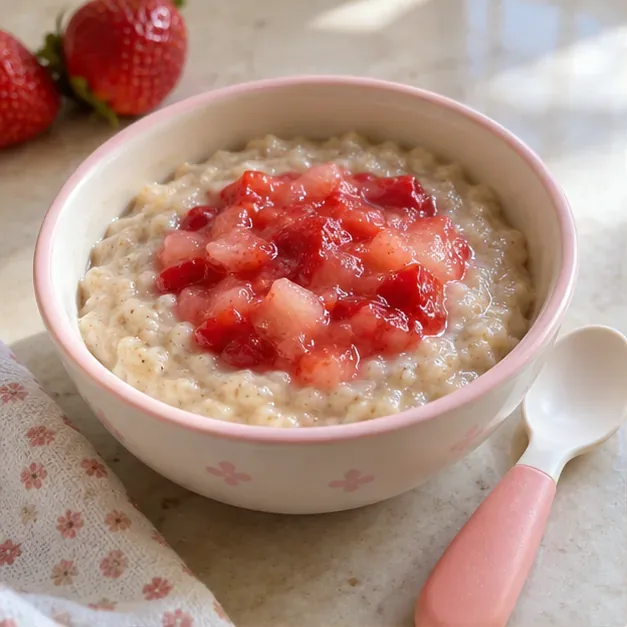
Soft cereal with strawberries is one way to pair a cereal choice with a vitamin C fruit; check the label if you want an iron-fortified product.
Pair plant iron with vitamin C
Vitamin C at the same meal can help the body absorb nonheme iron. Pairing does not need to be complicated: lentils with tomatoes, iron-fortified cereal with strawberries, beans with sweet pepper, or tofu with broccoli are practical combinations. Oranges, berries, tomatoes, broccoli, cabbage, papaya, and sweet potatoes are among the vitamin C foods listed by the CDC.
In the hypothetical example, Jordan might have iron-fortified cereal with strawberries at breakfast, lentils cooked with tomato at lunch, or soft tofu with broccoli at dinner. These are examples, not a prescribed menu or a guarantee that a child meets an individual iron need. The parent can choose the foods Jordan tolerates and rotate them through the week.
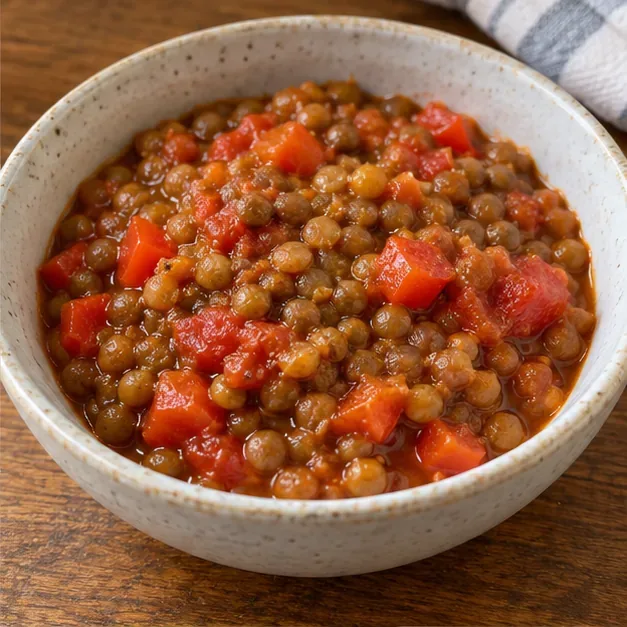
Cooked lentils with tomato and soft pepper combine a plant source of iron with vitamin C foods.
Make the food easier to accept
Keep the first serving small and let the child decide whether to taste it. Put a familiar food on the plate alongside one iron-rich food, and model eating it yourself. Try a different shape or texture: mashed lentils in pasta sauce may be easier than a bowl of whole lentils, while a child who dislikes mixed foods may prefer each item in a separate section. Offer the food again another day without bargaining, forcing bites, or making dessert conditional on eating.
For Jordan, the parent could serve a familiar pasta with a spoonful of lentil-tomato sauce on the side, or offer soft tofu separately from the broccoli. If Jordan declines it, the meal still includes familiar foods. The next exposure can happen later; there is no need to turn dinner into a test of whether the child is iron deficient.
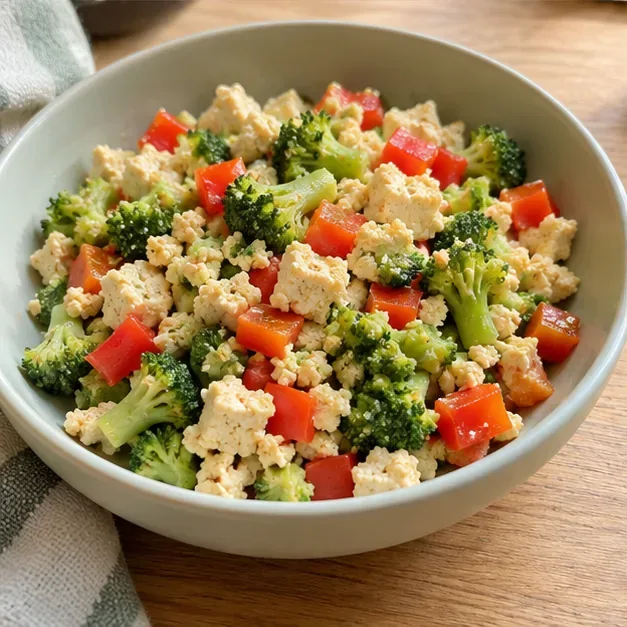
Soft tofu with cooked vegetables offers another non-meat meal idea; adjust the pieces to the child’s eating skills.
Check milk intake and infant feeding with a clinician
For children older than 12 months, large amounts of cow’s milk can crowd out iron-containing foods because milk itself is low in iron and can make a child feel full. The American Academy of Pediatrics advises limiting milk after the first birthday to no more than 24 ounces a day. Ask the child’s clinician what is appropriate for your child’s age, growth, and overall diet. Cow’s milk should not replace breast milk or iron-fortified infant formula before 12 months.
Infants need a separate plan. Once complementary foods begin at about 6 months, iron-containing foods become important. A baby’s needs depend partly on whether they receive breast milk, iron-fortified formula, or both; babies born prematurely may need extra iron. Ask the pediatrician or nurse about supplements rather than starting iron drops yourself. Around 12 months, clinicians commonly screen for anemia. Iron products must be kept out of children’s reach because an accidental overdose can be dangerous.
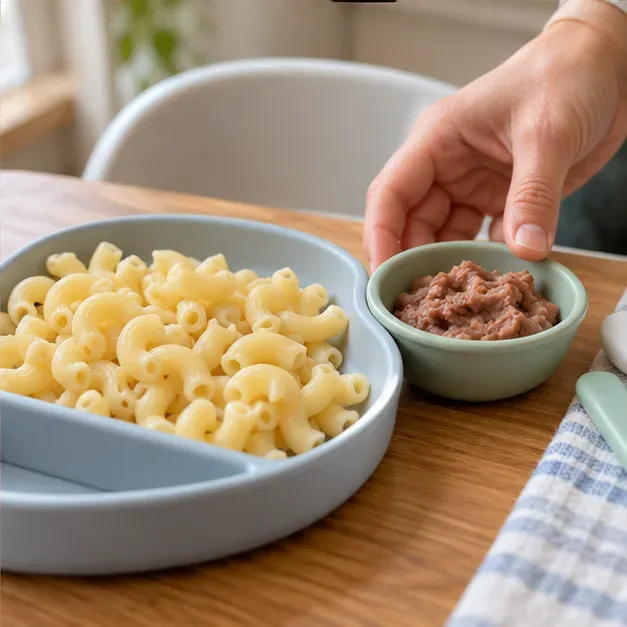
A small side portion lets a child see a new food beside something familiar without pressure to eat it.
When is meat refusal a reason to seek advice?
Make a routine appointment if your child’s diet is very limited, the child drinks a lot of milk and eats few solid foods, growth is slowing, or you have concerns about chewing, swallowing, energy, or development. Ask about iron at scheduled well-child visits, especially for infants and children with prematurity, low birth weight, a plant-only diet, blood loss, or digestive conditions that may affect absorption.
Pale or ashy skin, unusual tiredness, irritability, weakness, or cravings for nonfood items such as ice, dirt, or paper can occur with iron-deficiency anemia, but they can also have other causes. Symptoms cannot confirm the diagnosis; a clinician can decide whether screening or lab tests are appropriate. Seek prompt medical care for fainting, significant shortness of breath, a very rapid heartbeat, or a child who is difficult to wake. If a child is choking or struggling to breathe, call emergency services.
For any child under 4, prepare foods to match their developmental eating skills: supervise meals, have the child sit upright, and mash or cut foods as needed. Whole beans and firm, large chunks can be choking hazards for young children. A picture of a food is not a serving-size or safety instruction; use current age-specific preparation guidance.
A practical takeaway
Parents do not need to win a battle over meat to offer iron. Build meals from accepted foods, add a reliable iron source such as fortified cereal, beans, lentils, or tofu, and pair plant iron with vitamin C. Keep trying new options calmly, check milk intake for toddlers, and raise concerns about symptoms, growth, or a very restricted diet with the pediatrician. For Jordan—the hypothetical child who rejects meat—the next useful move is a familiar meal with one small iron-rich addition, not a diagnosis based on a single refusal.