To track a recurring lip rash after switching lip products, keep a dated record of what touched your lips, when you used it, when symptoms appeared, and how the rash changed. This five-step log can help a clinician assess possible patterns without assuming that a new balm or lipstick caused the rash. Contact dermatitis is one possibility, but irritation, allergy, and other conditions can look similar; a log cannot diagnose the cause.
Prerequisites
- A paper notebook or private notes app, plus a calendar or camera for dated photos.
- The new and previous lip products, packaging, ingredient lists, and purchase or first-use dates. Keep the containers or take clear photographs of all sides.
- A simple symptom record, including whether the lips feel itchy, burning, painful, dry, cracked, swollen, or blistered.
- Estimated setup: About 10–15 minutes, then 2–5 minutes per day while tracking. This is a practical estimate, not a clinical requirement. Difficulty: Easy.
How to make a lip rash and product timeline
Step 1: Set a baseline and identify the product change
Write down when you first noticed the rash and when you switched lip products. Record the product’s exact brand and name, type (balm, lipstick, gloss, sunscreen, or treatment), shade or variant, first-use date, and how often you apply it. If you still have the package, photograph the ingredient list, lot or batch code, and expiration or period-after-opening mark. Product formulas can vary by shade or change over time, so “new lipstick” alone may not be enough detail for a clinician.
Add the previous product you used, including how long you used it and when you stopped. Note whether the rash began before or after the switch, whether it improved after stopping the new item, and whether it returned after any accidental contact. These details show timing; they do not prove cause. Avoid deliberately applying a suspected product again to see whether a reaction returns, especially if the prior reaction was severe.
Step 2: Log every relevant exposure each day
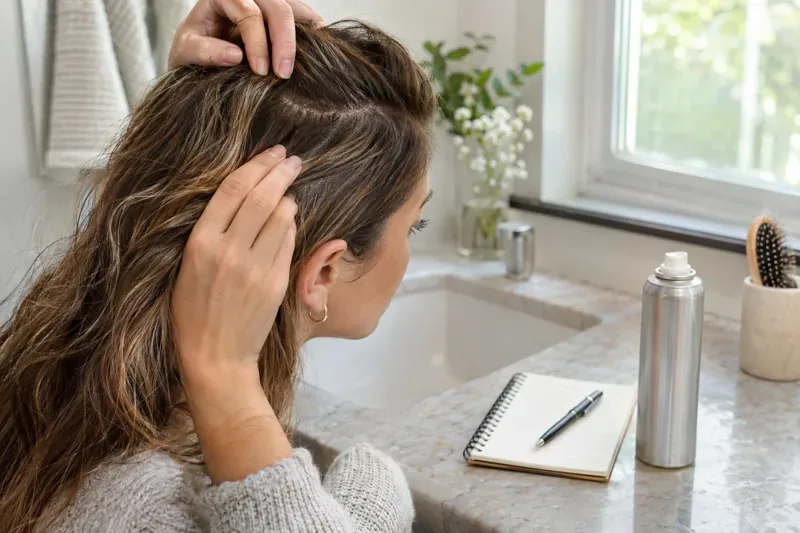
For each day, record every lip product and approximate application time. Include products that may touch the lips indirectly: toothpaste, mouthwash, dental products, facial skin care, sunscreen, makeup, and topical medicines. Note foods or drinks that seem relevant, wind or cold exposure, frequent lip licking, and any unusual contact such as a musical instrument or dental visit. Contact cheilitis can have several potential sources beyond lipstick or balm, including oral-care products, flavorings, fragrances, preservatives, foods, and medicines.
Keep the record factual. Instead of writing “the mint caused it,” write “used mint-flavored toothpaste at 8 a.m.; burning noted around noon.” That distinction helps a dermatologist compare repeated timing without treating coincidence as proof. Do not stop a prescribed medicine without speaking with the prescriber.

Step 3: Describe the rash in consistent, plain language
Once or twice a day, note the location and visible changes: upper lip, lower lip, corners of the mouth, border where the lip meets facial skin, or nearby skin. Describe color in your own words, dryness, scaling, cracking, tenderness, itch, burning, swelling, blisters, or oozing. If helpful, use the same personal 0–3 scale each time (0 = none, 1 = mild, 2 = moderate, 3 = severe). This is only a way to compare your own entries; it is not a validated medical score.
Also record what changed that day: better, unchanged, or worse, and whether symptoms interfered with eating, speaking, sleep, or applying products. The American Academy of Dermatology describes contact dermatitis on or around the lips as potentially itchy or painful, with dry, flaky lips that can split. Those signs can fit contact dermatitis, but they do not identify a specific ingredient or rule out other diagnoses.
Step 4: Take clear, dated photos without irritating the area
If you are comfortable, photograph the lips when the rash is active and again when it improves. Use ordinary, even lighting and a similar distance and angle each time; include the surrounding skin so the distribution is visible. Avoid filters, color correction, or close rubbing and stretching. Keep images private and note the date with each photo. A picture can document appearance at that moment but cannot show what caused it.
Do not apply a suspected product just to create a photograph or provoke a visible flare. If the rash changes rapidly or becomes severe, prioritize medical care over documentation.
Step 5: Summarize the timeline for your appointment
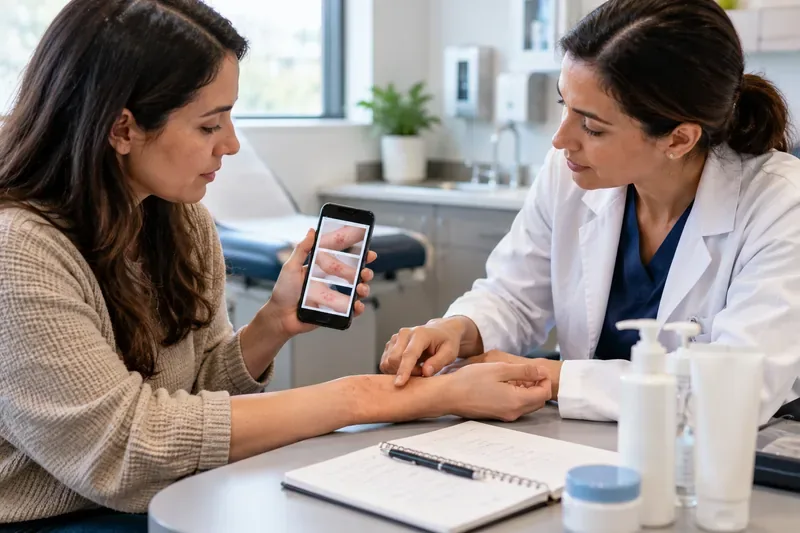
Bring the timeline, photos, product packages or ingredient-list pictures, and a current medication list to a primary-care clinician or dermatologist. Prepare a brief summary: when the rash started, what product changed, which areas are involved, what symptoms you experience, what you stopped using, and whether symptoms improved. Mention all lip and oral-care products—not just the newest balm—because more than one exposure may be relevant.
If the rash keeps returning, is severe, or does not improve, arrange a medical evaluation rather than extending a home experiment. The clinician may consider irritant and allergic causes and decide whether patch testing is appropriate. Patch testing is a clinician-directed test for delayed skin allergy; do not tape products to your lips or perform a home patch test. A dermatologist may want to review or test your own products as part of a supervised evaluation.
Example timeline entry
| Date and time | Products or exposures | Symptoms and location | Photo or change |
|---|---|---|---|
| Monday, 8 a.m. | New tinted balm applied; usual toothpaste | Dryness at lower lip noted at 2 p.m.; mild burning | Photo in window light; no product reapplied after noticing symptoms |
| Tuesday, morning | No tinted balm; other routine products recorded | Cracking unchanged; corners comfortable | Photo from same distance; contacted clinic for advice |
This is a made-up example to show the format, not a clinical case or evidence that a balm causes a rash. The important details are dates, exposures, symptom timing, and changes—not a guessed diagnosis.
Troubleshooting
I changed several products at once. How can I untangle the timeline?
List each change separately with its first-use date and how often you used it. Include toothpaste, mouthwash, sunscreen, and facial products. Do not restart products just to isolate a culprit. Ask your clinician whether and when any one-at-a-time product introduction is appropriate. The AAD describes stopping lip products until a rash clears and then adding one product at a time; because recurring or significant reactions may need medical assessment, use that approach only when it is safe for your situation and follow clinician guidance.
The rash cleared, then returned. Should I retry the new product?
Do not intentionally challenge your lips with a suspected trigger, particularly after swelling, blisters, a severe flare, or symptoms beyond the lip area. Record any accidental re-exposure and contact a clinician. A dermatologist may recommend supervised patch testing or another evaluation rather than a home restart.
I cannot tell whether it is allergy or irritation. What should I record?
Record both the sensations and appearance, along with product contact and timing. Irritant and allergic contact dermatitis can overlap, and other causes can resemble them. Avoid labeling the entry “allergy” unless a clinician has diagnosed one. Bring the details for a medical assessment.
FAQ
How long after using a lip product can a rash appear?
Contact dermatitis may show up within hours or days after exposure, and reactions may persist while exposure continues. Record the time you used products and when symptoms began; timing alone cannot identify the cause.
Should I stop using the new lip balm?
If you suspect it is linked to a rash, avoid reapplying it while the rash is active and ask a clinician for advice, especially if the reaction is recurring or significant. Do not stop prescribed medicines without consulting the prescriber.
When is lip swelling an emergency?
Sudden swelling of the lips, tongue, mouth, or throat, or difficulty breathing or swallowing, can signal a serious allergic reaction. Seek emergency medical help immediately using your local emergency number.
Sources: American Academy of Dermatology: Itchy rash could be contact dermatitis; American Academy of Dermatology: Patch testing can find what’s causing your rash; DermNet: Allergic contact cheilitis; NHS: Contact dermatitis; and NHS: Angioedema and emergency symptoms. These sources discuss possible symptoms and evaluation; they do not establish the cause of an individual reader’s rash.