Why Penile Skin Can Become Irritated Without an STI
Penile skin irritation can come from soaps, friction, skin conditions, or infection. Learn what to track, what may help, and when to seek care or STI testing.
Illustrative example: Alex notices a red, itchy patch on the skin of his penis a day after switching to a fragranced body wash and taking a longer-than-usual bike ride. This made-up example shows how to think through possible triggers; it is not a real patient story, proof of a cause, or a diagnosis. Irritation can come from non-sexually transmitted causes, but appearance alone cannot rule out an STI.
Common explanations include contact with irritating products, friction, moisture, a skin condition, or inflammation around the head of the penis and foreskin (balanitis). Some infections that cause genital irritation are not classified as STIs, while some STIs can cause mild or easily missed symptoms. The practical goal is to reduce avoidable irritation, notice patterns, and get examined or tested when symptoms call for it.
Penile skin can react to soap, shower gel, scented lotion, deodorant, detergent residue, or a product used during sex. Condoms or lubricants may also bother some people because of their ingredients or material. Irritant reactions may feel itchy, sore, or burning and can appear where a product touched the skin. A reaction can happen even if a product was previously tolerated.
In Alex’s example, the new body wash is a clue worth noting, not proof. Friction from cycling could also have contributed, and the rash could have another cause entirely. He can stop the newly introduced scented product and avoid scrubbing while he watches for change. If the symptoms persist, recur, or worsen, he should seek clinical advice rather than keep testing products on the area.
Repeated rubbing during sex, masturbation, exercise, cycling, or shaving can leave sensitive skin temporarily sore or irritated. Tight or damp clothing may add friction or keep the area moist. These factors can overlap with a reaction to cleanser or lubricant. If irritation follows a clear activity pattern, take a short break from the activity that rubs the area, keep the skin clean and dry, and avoid shaving until it has settled. Improvement after changing an exposure may support a link, but it does not exclude infection or another skin problem.
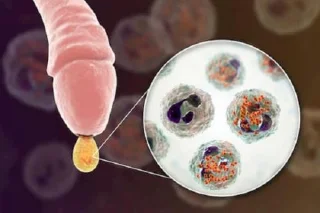
Balanitis means inflammation of the head of the penis and sometimes the foreskin. It is a description of inflammation, not a single cause and not an STI diagnosis. Irritation from products, yeast (thrush), bacterial infection, and some STIs can all be involved. Eczema, psoriasis, and other inflammatory skin conditions may also affect genital skin. A clinician may need to examine the area or take a swab or other test to distinguish among them.
The MedlinePlus balanitis overview, reviewed in July 2025, lists harsh soap and soap left on the skin among possible causes and explains that treatment depends on the cause. The NHS balanitis guidance also lists soap, shower gel, condoms, thrush, and some STIs as possible factors. This range is why choosing a cream based only on a picture or a guess can miss the right treatment.
If symptoms are mild and there are no warning signs, reduce likely irritation while arranging care if needed. For Alex, this means setting aside the new scented wash, avoiding prolonged rubbing, and keeping a brief record of what changes. It does not mean he can conclude the problem is harmless if it happens to improve.
NHS guidance recommends washing the penis with water or an emollient and drying gently when balanitis is present; it advises against soap or shower gel. If Alex’s foreskin is painful or difficult to retract, he should not force it to clean underneath. These steps can reduce exposure to irritants, but they are not a substitute for an examination when symptoms persist or other signs appear.
You usually cannot tell reliably from a rash alone. Itching or redness can occur with irritation, skin disease, and infection. A recent change in soap or an episode of friction makes a non-STI trigger plausible, but it cannot confirm one. Likewise, having no obvious sores does not prove there is no STI. Some infections may cause subtle symptoms or none at all.
Blisters, open sores or ulcers, unusual discharge, pain when urinating, or symptoms after a new sexual contact are reasons to contact a clinician or sexual health service and ask whether testing is appropriate. The clinician can consider the timing and type of sexual contact, examine the skin, and choose tests based on the symptoms. When herpes is a possibility, a swab from a fresh blister or sore may be useful; testing decisions depend on what is present and when exposure occurred. The CDC guidance on genital herpes testing recommends testing people with genital symptoms and explains that tests have limits. Seeking testing is a way to get an answer, not an admission or accusation.
Make an appointment with a healthcare professional if irritation is severe, does not settle, keeps returning, spreads, or is accompanied by foreskin swelling, difficulty retracting the foreskin, pain with urination, discharge, bleeding, blisters, or ulcers. A clinician can check for skin disease, infection, and other causes. Depending on the findings, evaluation may include an examination, a swab, urine or blood tests, or testing for conditions such as diabetes. Do not assume that a persistent patch is only irritation.
Seek urgent care if you cannot urinate, have severe pain or rapidly increasing swelling, or feel seriously unwell with fever. If a retracted foreskin becomes stuck behind the head of the penis and cannot be brought forward again, treat it as an emergency: the NHS phimosis guidance describes paraphimosis as requiring immediate treatment. Do not wait for a home remedy to work.
In the illustrative example, Alex can use the new product and the long ride as observations to share with a clinician, not as a diagnosis. If changing those exposures is followed by improvement, that is useful context. If it fails to improve, returns, or develops warning signs, the next step is an examination and, when relevant, STI testing. A clinician—not a checklist, image, or self-test based on appearance—can determine what is causing the irritation and what treatment fits.
This article is general health information and cannot diagnose the reader. Genital skin symptoms have overlapping causes, so seek professional care when symptoms persist, worsen, or raise concern.
Penile skin irritation can come from soaps, friction, skin conditions, or infection. Learn what to track, what may help, and when to seek care or STI testing.
Article by Doctor Nguyen Quang Hieu on how to measure the penis. In addition, the article also explains the factors that affect penis size.
Article by doctor Nguyen Lam Giang about swollen penis. This affects male fertility.
Penile headache is one of the unusual signs. This symptom is a manifestation of a disease related to the genital organs.
A foreskin break is when the foreskin ruptures due to overstretching. So what's wrong with breaking the foreskin brake wire? When to see a doctor?
The foreskin in men is a part of the male reproductive system. Let's find out the function of the foreskin and related information.
Cracked foreskin can be potentially dangerous. Here are some sharing on this issue, let's follow the article.