Why One Testicle Hangs Lower—and When to Get Medical Care

One testicle sitting lower is often normal. Learn why position varies, which new changes need a checkup, and when sudden pain requires emergency care.
A small difference in the height of the testicles is common. If one has always sat a little lower, and there is no new pain, swelling, lump, or change in size or shape, the difference is usually a normal part of anatomy. The important distinction is whether the position is longstanding and otherwise unchanged or has shifted suddenly along with symptoms.
Sudden or severe testicle pain is an emergency, even if you are unsure what caused it. A testicle that becomes newly higher, swollen, or unusually angled—especially with nausea or abdominal pain—can be a sign of testicular torsion, when the testicle twists and its blood supply is reduced. Do not wait to see whether it settles.
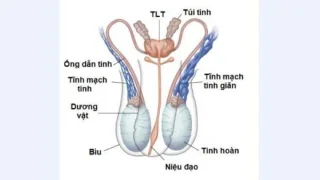
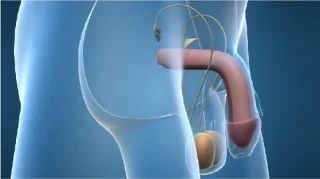
Each testicle hangs inside the scrotum on a spermatic cord. The two sides of the body are not perfectly symmetrical, so the testicles may rest at slightly different heights or have a small difference in size. A lower position by itself does not prove that something is wrong. The NHS guidance on checking testicles notes that it is common for one to be slightly larger or hang lower.
The scrotum also changes position. Muscles in its wall and around the spermatic cords move the testicles closer to or farther from the body as temperature and other reflexes change. They may sit higher when the body is cold or tense and hang lower when warm and relaxed. That temporary movement can make the difference look more noticeable at one moment than another. It should not be used to explain new pain or swelling.
There is no required “correct” side that must hang lower. What matters most is what is usual for your body and whether a new change is accompanied by other symptoms.
A lower-hanging testicle alone is generally less concerning than a new lump, swelling, pain, or change in shape. The following guide can help you choose what to do; it cannot identify the cause.
| What you notice | What to do |
|---|---|
| One testicle has sat slightly lower for a long time, with no other change | Usually not urgent. Keep track of what is normal for you and mention it at a routine visit if you remain concerned. |
| A new lump, persistent swelling, enlargement, heaviness, or change in shape or feel | Arrange a prompt appointment with a health care professional, even if it is painless. Many causes are treatable, but a new mass needs an examination. |
| Sudden or severe testicle pain; pain with nausea, vomiting, or lower abdominal pain; rapid swelling; or a newly high or oddly angled testicle | Go to an emergency department now or call your local emergency number. Do not wait for a routine appointment. |
| Pain or tenderness with fever, redness, urinary symptoms, or discharge | Get same-day medical advice. If pain is sudden or severe, use emergency care. |
In torsion, a testicle rotates and twists the spermatic cord, reducing blood flow. Pain often starts suddenly and may be severe; swelling, nausea, vomiting, abdominal pain, or a testicle sitting higher than usual can occur. Torsion is most common in adolescents but can happen at any age. It may begin during sleep, exercise, or after an injury, so the absence of a clear trigger does not rule it out.
Seek emergency care immediately for sudden or severe testicle pain. Also seek urgent evaluation if sudden pain improves or disappears without treatment: a testicle can twist and untwist, and the episode still needs prompt assessment. Guidance from Mayo Clinic on testicular torsion treats sudden or severe pain—and pain that suddenly resolves—as reasons for emergency or prompt medical care. Do not try to twist the testicle back yourself or use pain relief as a reason to delay.
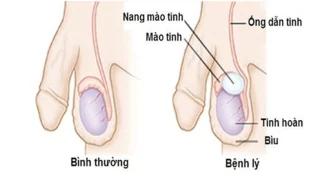
A painless change is not automatically harmless. Fluid around a testicle, a cyst near the epididymis, enlarged veins, a hernia, infection, and other conditions can cause scrotal swelling or a lump. Some testicular cancers may first appear as a painless lump or enlargement. These problems cannot reliably be distinguished by appearance or self-check alone. Arrange a prompt clinical assessment for a new lump, swelling, persistent ache, increasing size, heaviness, or a change in how the testicle feels. The NHS advice on testicle lumps and swelling says to have new lumps, swelling, changes in shape or feel, and persistent discomfort checked.
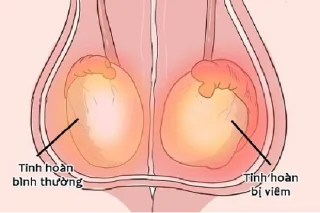
Inflammation or infection can cause gradual tenderness and swelling, sometimes with fever, painful or frequent urination, or discharge. These symptoms need medical evaluation because treatment depends on the cause. Contact a clinician the same day for testicle pain with fever, redness, urinary symptoms, or discharge. Sudden severe pain still belongs in emergency care, since infection-like symptoms do not safely exclude torsion.
You do not need to measure the height or compare the sides repeatedly. Instead, learn your usual appearance and feel during ordinary bathing or dressing. If you choose to check, the NHS suggests doing so during or after a warm shower, when the scrotum is relaxed: gently feel one testicle at a time and note a new lump, swelling, firmness, or change in size. The soft tube behind each testicle—the epididymis—is a normal structure, so not every ridge or cord-like area is a lump.
Write down when a change began, whether it is constant or comes and goes, and any related pain, fever, nausea, urinary symptoms, injury, or swelling. This can help a clinician decide what examination or testing is appropriate. Do not delay urgent care to complete a self-check or collect notes.
This information explains common patterns and warning signs; it cannot diagnose an individual. When in doubt about a new scrotal change, contact a health care professional, and treat sudden severe pain as an emergency.
One testicle sitting lower is often normal. Learn why position varies, which new changes need a checkup, and when sudden pain requires emergency care.
Relatable orchitis is a question many men ask their doctor. To learn this question, follow the article.
What is the normal testicle size? Learn about this issue with MSc.BS Tran Quoc Phong through the following article
The article is the doctor's answer to the question Can testicular atrophy be cured? At the same time, the article offers treatment methods.
Article by Doctor Nguyen Lam Giang about acne on the testicles. Although it is not life-threatening, men should not be subjective.
Epididymal cysts usually do not impair fertility and do not require treatment. The following article will give you more information about the disease.
What are the treatments for saggy testicles? Learn about ways to cure saggy testicles with MSc Tran Quoc Phong through the following article
How should testicle rupture be treated? Learn about this situation with MSc Tran Quoc Phong through the following article